
Semiconductor Dept.
The Semiconductor Department designs and manufactures MOCVDequipment, which Nippon Sanso supplies both domestically and internationally, along with related equipment.
In recent years, compound semiconductor products manufactured using MOCVD equipment have been widely adopted in various applications, including home lighting, red/green/blue LEDs for signal lights, laser diodes for Blu-ray playback, and FETs for transmitters in mobile phone base stations.
Lineup
MOCVD equipment for mass production
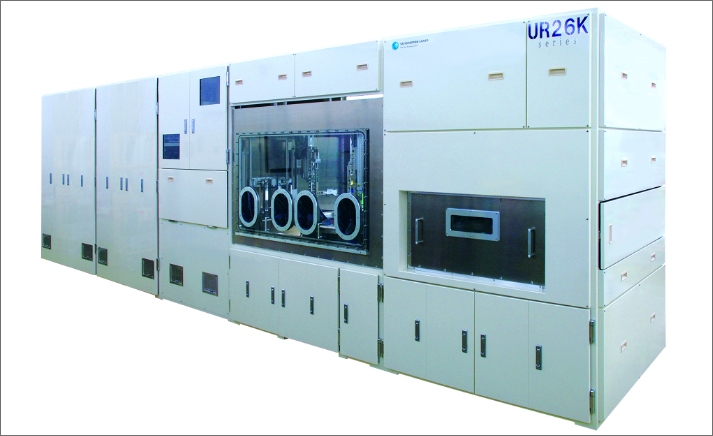
UR26K
The UR26K is an MOCVD system designed for GaN mass production, capable of growing device structures on 6x 8-inch or 10x 6-inch wafers simultaneously.
It has been developed for applications such as micro-LEDs and power control transistors.
The UR26K-CCD features cassette-to-cassette (C2C) operation and a parts cleaning system with automatic transport, making it well-suited for large-scale production environments.
MOCVD equipment for research and development
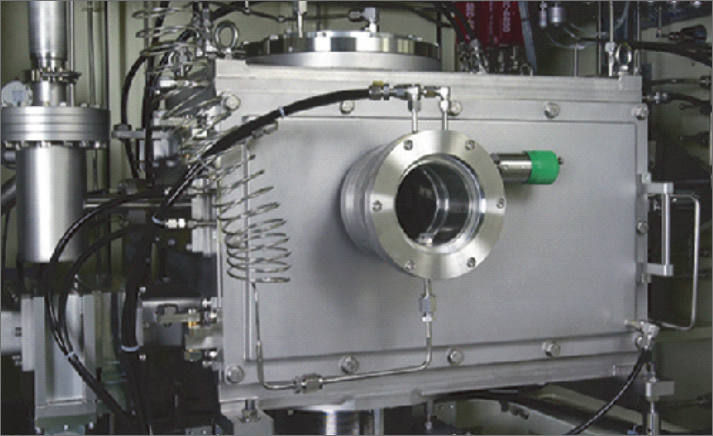
SR4000
The SR4000 is a compact MOCVD system designed for research and development, supporting the growth of epitaxial layers on a 1x 4-inch wafer or up to 3x 2-inch wafers.
It offers precise temperature control up to 1350°C for film deposition.
High-quality AlGaN film growth has been achieved through Nippon Sanso’s proprietary gas flow design.This system is widely used in research institutes for the development of AlGaN-based power control devices and UV LEDs.
MOCVD equipment for Ga2O3
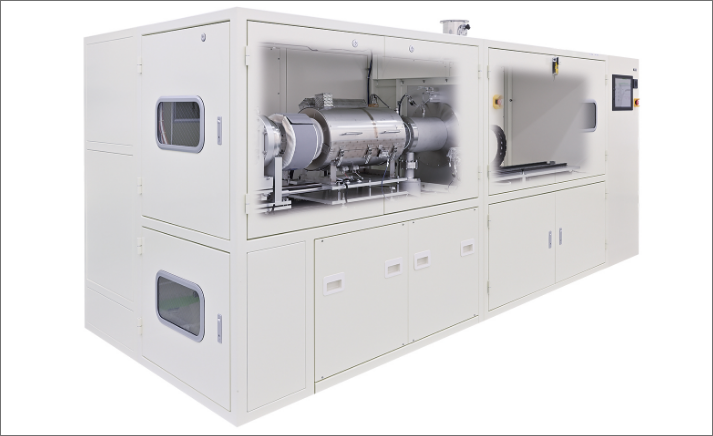
FR2000
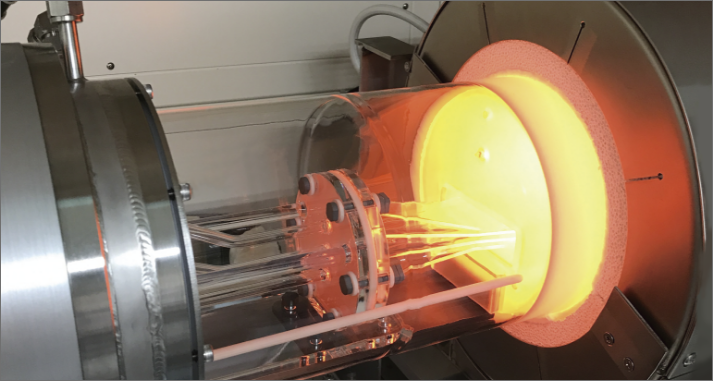
The FR2000 is an MOCVD system developed for the thin-film growth of Ga2O3 (gallium oxide), a promising material for next-generation power devices.
Unlike conventional MOCVD systems, the FR2000 is an oxide CVD system that utilizes oxygen as a precursor. As a result, it incorporates innovative gas flow and heating methods optimized for oxide film deposition.
Nippon Sanso MOCVD business website
https://nsc.jp.nipponsanso.com/mocvd/

What is MOCVD Equipment?
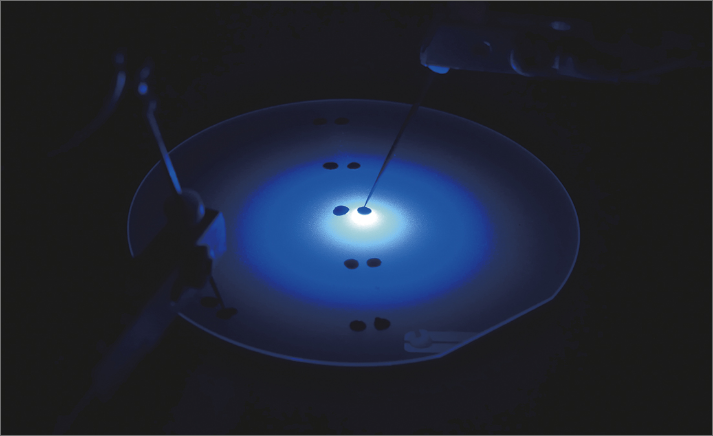
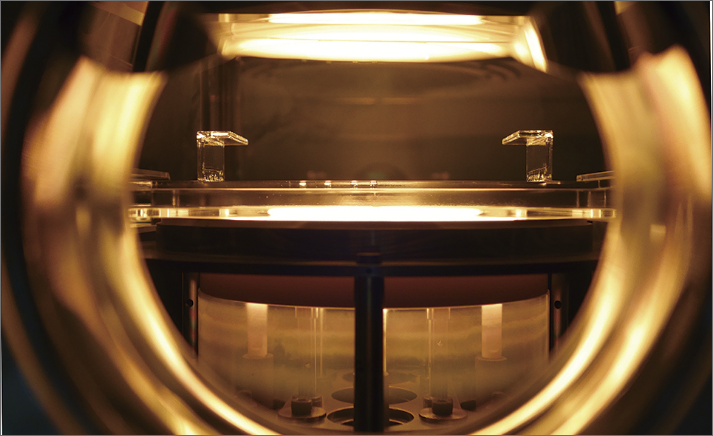
Light-emitting diodes (LEDs) and smartphoneshave dramatically enriched society in recent years.Compound semiconductors, with their unique characteristics, are essential materials in the core components of these groundbreaking devices.
Nippon Sanso has been a pioneer in the development of MOCVD (Metal-Organic Chemical Vapor Deposition) equipment, which is crucial for manufacturing compound semiconductors.
This equipment has been widely recognizedfor its world-class performance and stability.
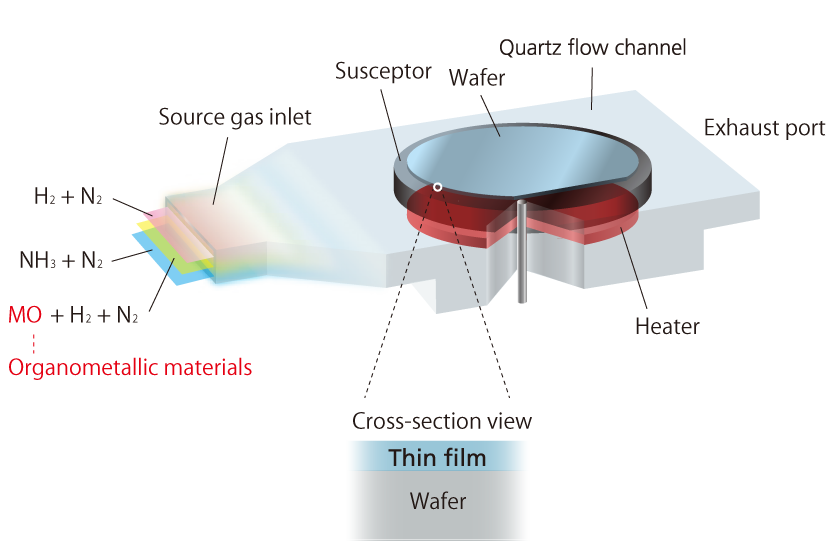
In the manufacturing process of electronic components, a critical step called deposition is used to form a thin semiconductor film on the surface of a substrate.
Compound semiconductor devices, such as LEDs and transistors, achieve their light-emitting and power control functions by repeatedly layering thin films of compound semiconductors with different properties onto the wafer.
One of the key film-forming technologies used in this process is Chemical Vapor Deposition(CVD). MOCVD is a specialized form of CVD that enables the deposition of compound semiconductors using metal-organic precursors.
The equipment designed for this process is known as MOCVD equipment, and plays a vital role in the production of high-performance electronic and optoelectronic devices.
What are compound semiconductors?
This is a next-generation semiconductor material that surpasses silicon (Si) and enhances performance by chemically reacting multiple elements. It possesses superior characteristics compared to conventional silicon semiconductors, such as the ability to “convert electricity into light,” “high electron mobility,” and “high breakdown voltage resistance,” making it widely used in LEDs, semiconductor lasers, and transistors.
Services
-
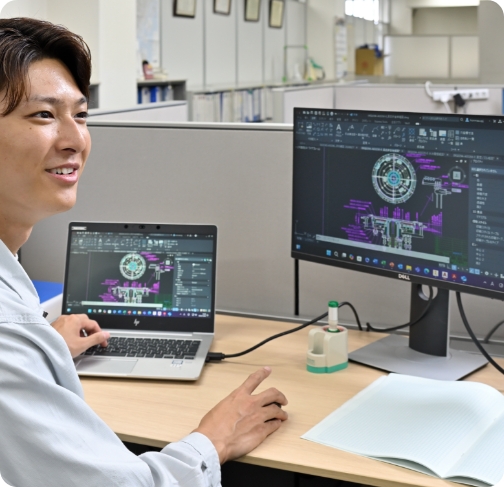
Design
Whether designing mechanical components or mapping the piping layout, we find ourselves in many situations that require CAD.
-
Assembly
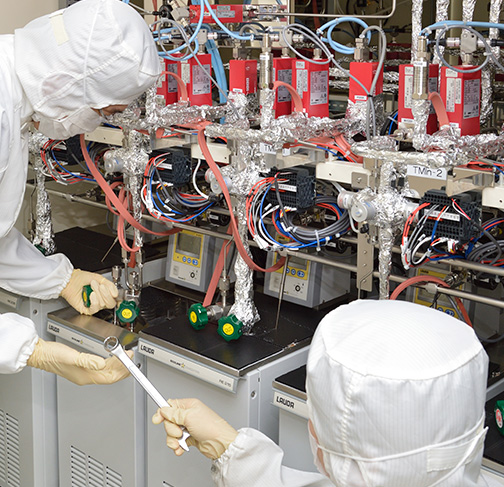
Machined components, in quantities anywhere from several hundred to thousands, are sent to the assembly line after each part undergoes strict inspection.
Assembling the equipment requires mechanical component assembly, piping assembly, electric system assembly, and various other technologies, so in-house experts in all fields work together to assemble the equipment. -
Deposition Test
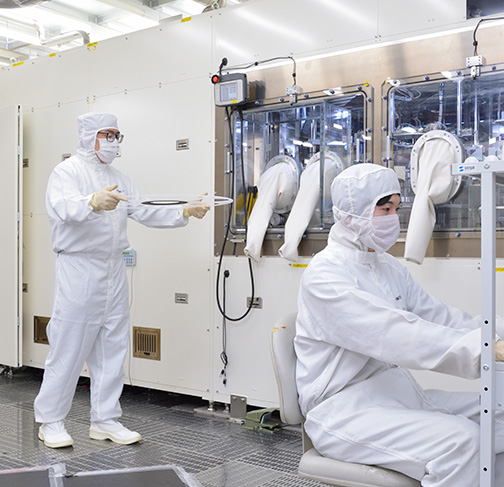
We perform deposition tests on all completed equipment before delivering to our clients. Nippon Sanso ATI employs engineers who understand process technologies, and they are able to create demo samples at Nippon Sanso’s Tsukuba Laboratory and evaluate the quality of the deposition process.